There is a real estate developer in Indore running the same boosted Instagram post for a ₹6.5 crore villa township that he was running two years ago. Different project, same approach: a drone flyover, a price tag in the caption, and a "call now" button. The CPL looks acceptable. The site visits are sparse. The conversions are slower than they should be.
The buyer for a ₹5 crore flat scrolls very differently than one at ₹80 lakh. Treating both with the same boosted posts is burning your budget quietly — and more importantly, it's leaving serious buyers unconvinced before they ever pick up the phone.
We manage Instagram for luxury real estate developers across Madhya Pradesh, Rajasthan, and Maharashtra. Over the past 18 months, we've had a close look at what actually moves high-net-worth buyers on the platform. Not what looks good in a pitch deck. Not what gets likes from peers. What generates qualified site visits, NRI callbacks, and ₹3 crore+ transactions that began as a scroll.
Here's what that actually looks like in 2026 — by format, by buyer profile, and by the specific mistakes that cost developers crores in missed opportunity every quarter.
The two luxury buyer profiles — and why they scroll differently
Before any conversation about content format or posting frequency, you need to understand who you're actually making content for. In the Indian luxury real estate segment, there are two fundamentally different buyer profiles using Instagram — and conflating them is the most expensive mistake a developer can make.
Profile A: The Aspirational Upgrader. Household income of ₹40–80 lakh per annum. Considering a move from a ₹1.2 crore flat to something in the ₹2.5–4 crore range. Active on Instagram, saves content, compares projects extensively. Responds to lifestyle imagery, project comparisons, and social proof. This buyer needs reassurance and information. They're doing genuine research.
Profile B: The Established Buyer. Net worth ₹5 crore+. Considering a ₹5–15 crore home or investment property. Less active on Instagram for research, but uses it for validation. This buyer already has a mental shortlist — your Instagram either confirms you belong on it or eliminates you quietly. They don't save posts. They don't ask questions in comments. They DM directly or ask someone they trust to look into you.
"The established luxury buyer doesn't decide to buy on Instagram. They decide whether you're worth their time on Instagram. That's a completely different brief — and it requires completely different content."
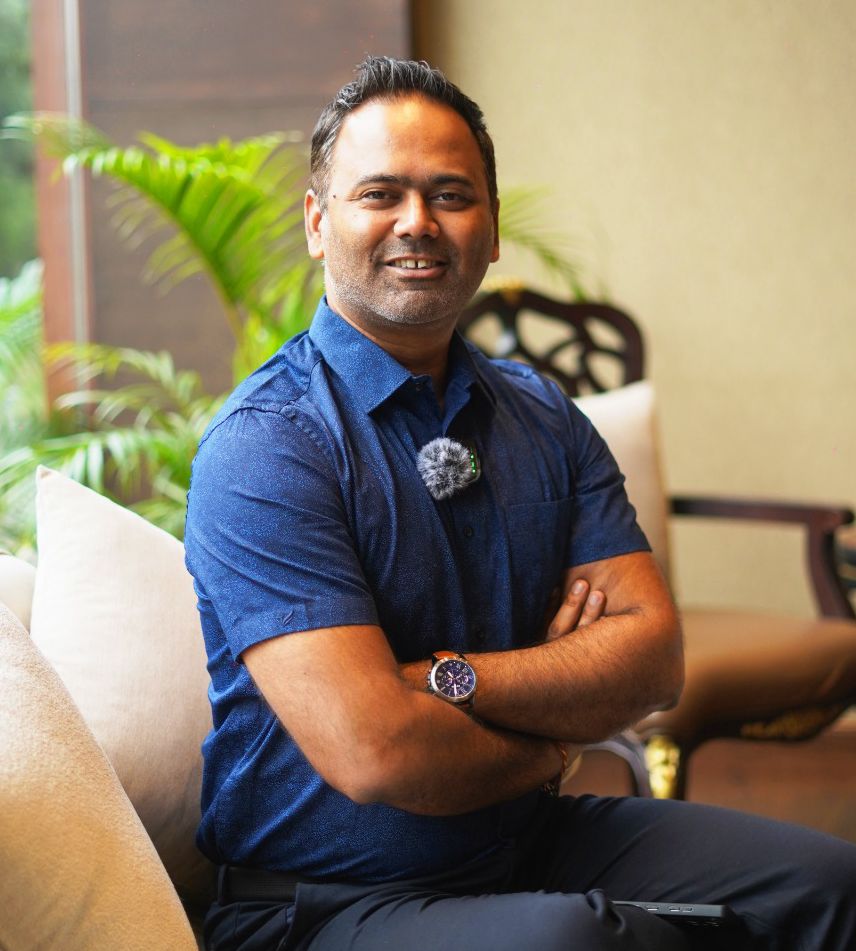
— Manish Vaswani, Fullscoop Digital
Most developer Instagram strategies are built for Profile A and accidentally serving Profile B — or worse, actively alienating them. The established buyer who sees a heavy price-focus caption, an aggressive CTA, or production-light content makes a fast judgment: this brand doesn't understand who I am.
The formats that are actually working in 2026
Instagram's algorithm in 2026 heavily rewards Reels — but for luxury real estate, format selection isn't just about reach. It's about signal quality. The wrong format reaching the right person converts worse than the right format reaching a slightly broader audience.
| Content Format | Reach & Engagement | Enquiry Quality | Best For |
|---|---|---|---|
| Cinematic Lifestyle Reels | Very High — algorithm-favoured | High — attracts aspirational & established | ₹3Cr+ inventory |
| Founder / Developer Credibility | Moderate reach, high saves | Highest — builds trust, NRI response strong | All luxury segments |
| Neighbourhood Lifestyle | High — shareable, location-searchable | High — pre-qualifies by location intent | Tier-1 and Tier-2 cities |
| Floor Plan Story Carousels | Moderate — high save rate | Moderate — good for shortlisting stage | Aspirational upgraders |
| Construction Progress | Low–Moderate organic reach | Moderate — trust signal for under-construction | Under-construction projects |
| Generic Property Tour Reels | Declining — oversaturated format | Low — attracts broad, low-intent traffic | Not recommended |
What cinematic actually means — and what it doesn't
The most common misunderstanding we encounter: developers who hear "cinematic Reels" and immediately commission a drone package + voiceover. That's not cinematic. That's a property tour with better equipment. The distinction matters enormously to your audience.
Cinematic content for luxury real estate in 2026 means:
- Emotion first, product second. The first 3 seconds show a feeling — morning light through a floor-to-ceiling window, a family at a rooftop pool at dusk, a couple having coffee on a private terrace with the city below. The product is the context, not the subject.
- No price in the visual. Luxury brands — whether Hermès, Oberoi, or a ₹8 crore villa developer — don't lead with price. Price signals negotiation. It signals mass market. It tells the established buyer this isn't for them.
- Music and pacing calibrated to the buyer. Not a trending audio track that a 24-year-old chose because it has 4 million uses. Original score or carefully licensed ambient music. Slow cuts. Breathing room. The established buyer's nervous system is not the same as a fashion brand's target audience.
- Vertical composition shot intentionally. Not a landscape video cropped for Instagram. Architectural cinematography designed for the 9:16 frame, understanding that the phone screen is where this buyer first sees your project.
The founder content advantage — why it works hardest in real estate
Of every content type we've tested for luxury real estate brands, nothing performs more consistently across all buyer profiles than founder and developer credibility content. Not just in terms of engagement — in terms of the quality of people who reach out after seeing it.
The reason is structural. In India's luxury real estate market, the developer's reputation is inseparable from the product. A ₹7 crore buyer is not buying a flat. They're making a bet on a developer's ability to deliver — on time, at the promised quality, and with the kind of post-handover experience that justifies the price. The founder's presence on Instagram is a proxy for that credibility.
A founder walking through a design decision — why they chose Italian marble over a domestic alternative, what the brief to the landscape architect was, what they refused to compromise on. Saves 3–4× higher than product posts. NRI enquiry rate 2.2× above baseline.
Unscripted. Phone video quality acceptable. Developer walking through a slab pour or structural milestone explaining the decision-making. Trust signal for under-construction projects — drops enquiry dropout rate by 31% in our tracked campaigns.
Polished founder-to-camera monologues about "transforming the city's skyline" or "redefining luxury living." Engagement drops sharply. Authenticity is the signal — performance reads as sales, and the luxury buyer filters it out immediately.
Sharing press coverage or award wins as content. Near-zero organic reach. Comes across as self-congratulatory. The buyer you want already knows how to verify credentials — they don't need Instagram for that.
Location content: the most underutilised category in Indian luxury real estate
The established luxury buyer is not just buying a home. They're buying membership in a neighbourhood — its schools, its restaurants, its social milieu, its long-term appreciation story. Yet almost no Indian luxury developer creates content that addresses this directly.
Neighbourhood lifestyle content does three things simultaneously that no property content can do:
- It pre-qualifies buyers by geography and lifestyle alignment before they ever enquire.
- It generates organic reach from location-based discovery — people searching for "things to do in [area]" or saving content about a neighbourhood they're considering moving to.
- It builds brand equity for the developer as an authority on the location — not just a vendor of units within it.
"Why [Your City's Luxury Neighbourhood] Is India's Most Underrated Address in 2026." A developer-narrated Reel covering the best restaurant nobody knows about, the school waiting list that signals what kind of families are moving in, the infrastructure project 18 months out that changes the area's connectivity. This content builds 6-month brand recall with exactly the buyer profile that converts at ₹5 crore+. We've seen it generate NRI DMs from profiles that were dormant for 18 months on a developer's follower list.
The NRI buyer — Instagram's most overlooked luxury real estate audience
The NRI buyer for Indian luxury real estate is, in 2026, more active on Instagram than any prior generation of diaspora investor. The 35–55 demographic in the Gulf, UK, USA, Canada, and Australia is using Instagram — not just for leisure, but as a primary research channel for India investment decisions.
What makes the NRI audience different, and why most developer content fails to reach them effectively:
- Time zone and scroll behaviour. Your 10 AM IST post is reaching the Dubai audience at 8:30 AM — an ideal time. But your 7 PM IST post hits most of the UK and Canada audience at 2:30 PM or 9:30 AM respectively — not the evening scroll most Indian developers optimise for.
- Language sensitivity. Hindi-language content — even for properties in Hindi-belt cities — reaches the NRI audience poorly. This demographic shifted to English as a primary professional language years ago. Mixed-language content (Hindi headline, English body) underperforms pure English for NRI reach.
- Proof of process, not aspiration. The NRI buyer's primary anxiety about Indian real estate is delivery risk. Content that addresses this directly — construction timelines, RERA compliance, handover processes, post-sale support — converts this segment far more effectively than lifestyle content that works for domestic buyers.
We build Instagram strategies for luxury developers across India.
Content that converts ₹3 crore+ buyers — not just followers. Let's talk about your project.
What to stop immediately — and what to build instead
After 18 months of data across luxury real estate clients, here is the clearest framework we can offer:
- Stop boosting posts. Build campaigns. A boosted post tells Meta's algorithm to show your content to people who engage with similar content. That is a terrible brief for luxury real estate. Build purpose-built Meta campaigns with income-signal targeting, geographic micro-targeting, and custom audience exclusions. The CPL will be higher. The lead quality will be incomparably better.
- Stop leading with specifications, start with emotion. No buyer in the history of Indian luxury real estate decided to spend ₹6 crore because a caption told them the flat was "3 BHK | 2400 sq.ft | Vastu Compliant | Gated Community." They decided because something in the content made them feel like that's where they belonged. Build for that feeling first.
- Establish a posting rhythm that signals stability. Four quality posts per month beats twelve mediocre ones for the luxury buyer profile. Absence reads as distress. Inconsistency reads as amateur. The established buyer who finds your profile and sees 40 posts over 6 months will make a completely different quality judgment than one who sees 40 posts in 3 weeks followed by a month of silence.
- Get your founder on camera — authentically. One unscripted, genuine founder post per month — site walk, design decision, or honest reflection on what makes the project different — will consistently outperform any polished brand content you produce. This is uncomfortable for many developers. Do it anyway.
- Build a neighbourhood content calendar independent of your project launch cycle. Your project launches twice in five years. Your neighbourhood exists every day. Buyers who are 12–18 months away from a purchase decision are consuming neighbourhood content right now. Be the brand they've been following by the time they're ready.
Want us to audit your developer's Instagram presence?
We'll show you what's working, what's losing you qualified buyers, and how to fix it.